
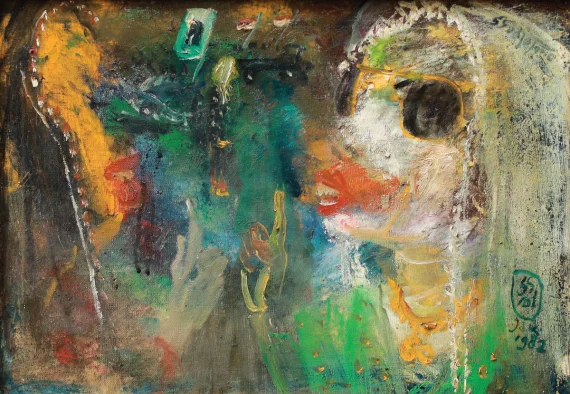
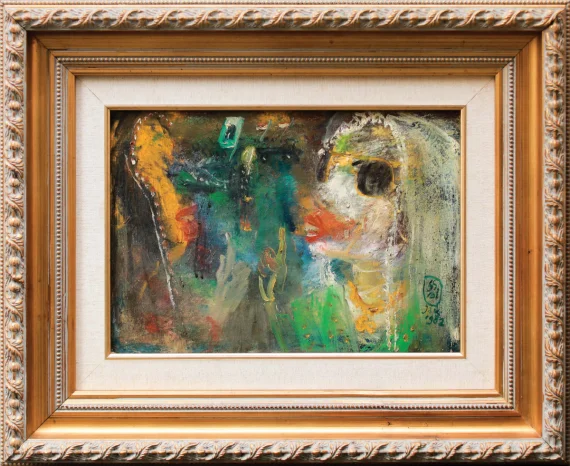
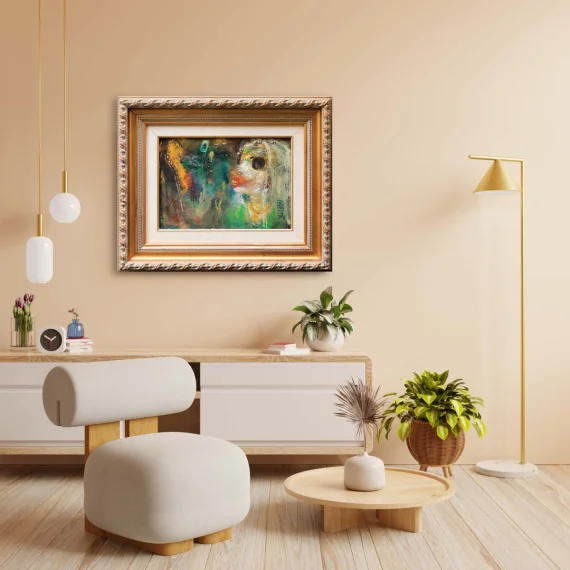


Sindudarsono Sudjojono
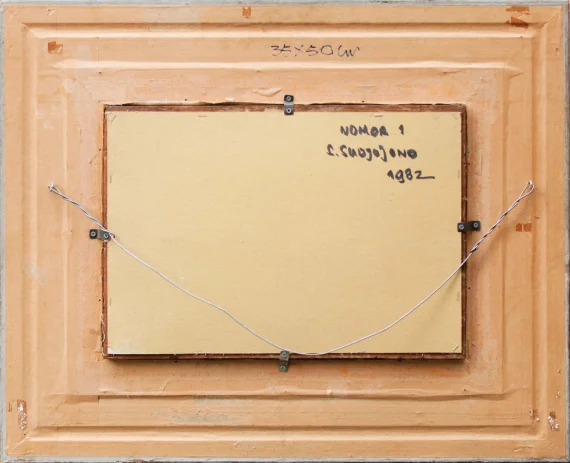
No.1 (1982)
Height 35cm x Width 50cm
media :
- Oil on canvas
Details :
Oil on canvas: 35 x 50 cm
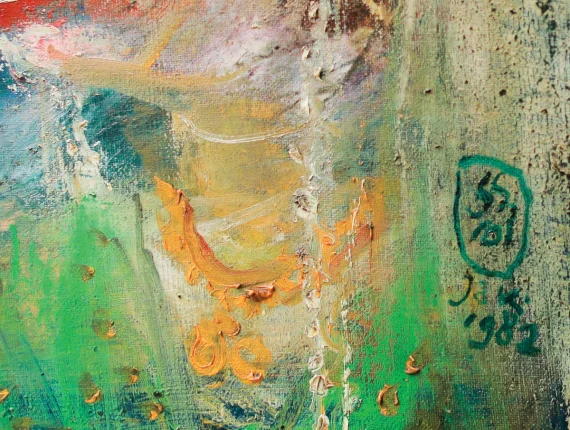
Signed and dated, lower right: SS.101, Jak, 1982
This artwork is featured in the online article titled 'Pemilu dan Pelukis Tempo ”Doeloe”' published by kompas.id in 2024
PASSED
Estimate:
SGD 34,000 - 45,000
*Currency conversions are for guidance only. All payments must be made in accordance with our Conditions of Sale agreement.
 Indonesia
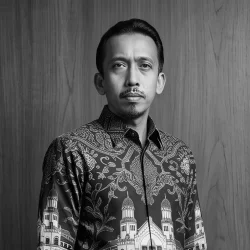
Sindudarsono Sudjojono
Sudjijono Sindudarmo, S. Sudjojono | 1913 – 1985
Sindudarsono Sudjojono (December 14, 1913 – March 25, 1985), born Sudjijono Sindudarmo and widely known by his initials S. Sudjojono, was a legendary painter and pioneering art critic revered as the Father of Indonesian Modern Art. He was the first artist to introduce modernity to the archipelago's art scene by anchoring it directly to the nation's factual realities and social conditions. Through his radical concept of Jiwa Ketok (The Visible Soul), Sudjojono established a new benchmark for an honest, character-driven Indonesian visual identity.
After completing his education at Taman Guru—an institution under the auspices of the Taman Siswa school system founded by Ki Hajar Dewantara—Sudjojono began his service as an educator. In 1937, Sudjojono's artistic talent began to gain widespread recognition when he successfully broke into a joint exhibition alongside European painters at the Bataviasche Kunstkring in Jakarta. This momentum became a crucial turning point in his artistic career.
On October 23, 1938, S. Sudjojono and Agus Djaya made great history by pioneering the establishment of the Indonesian Association of Drawing Artists (Persatuan Ahli Gambar Indonesia or PERSAGI), with Sudjojono serving as its secretary and spokesperson. The founding of Persagi is widely recognized as the milestone that marked the birth of modern Indonesian painting.
The appeal and spirit of renewal championed by Persagi successfully attracted other legendary painters to join, including Affandi, Emiria Soenassa, Otto Djaya, and Soedibio. In addition, he was also active in the Keimin Bunka Shidosho cultural center along with other legendary painters such as Affandi, Basoeki Abdoellah, Otto Djaya, and Basuki Resobowo.
As an artist, Sudjojono possessed a highly distinctive visual style. His paintings were renowned for being bold and raw, characterized by spontaneous brushstrokes and heavy textures that seemed impulsively poured onto the canvas. Through his Jiwa Ketok philosophy, he rejected superficial aesthetics. Instead, his subjects focused on the actual plight and realities of the Indonesian people, expressed honestly, unpretentiously, and loaded with emotional depth.
Beyond the canvas, Sudjojono was a vocal art critic with a fierce nationalist spirit. He frequently leveled sharp criticisms against his contemporary, Basoeki Abdoellah, whom he deemed lacking in nationalism for painting idealized landscapes of Indonesia (the Mooi Indië / Beautiful Indies style) to cater to Western tourist markets. The intense ideological rivalry between the two maestros persisted for years, until it eventually softened through the initiative of real estate tycoon and art collector, Ciputra. Ciputra successfully brought Sudjojono, Basoeki Abdoellah, and Affandi together for a historic joint exhibition at the Ancol Art Market (Pasar Seni Ancol) in Jakarta.
In the political arena during the Old Order era, Sudjojono’s socio-political commitment led him to join the Institute for People's Culture (Lembaga Kebudayaan Rakyat / Lekra) and the Indonesian Communist Party (PKI), through which he was eventually elected as a parliamentary representative.
Selected Exhibition History
| Year | Exhibition / Venue | Location |
| 1980 | Fukuoka Art Museum | Fukuoka, Japan |
| 1990 | Festival of Indonesia | United States |
| 1993 | Gate Foundation | Amsterdam, Netherlands |
| 1994 | Singapore Art Museum | Singapore |